
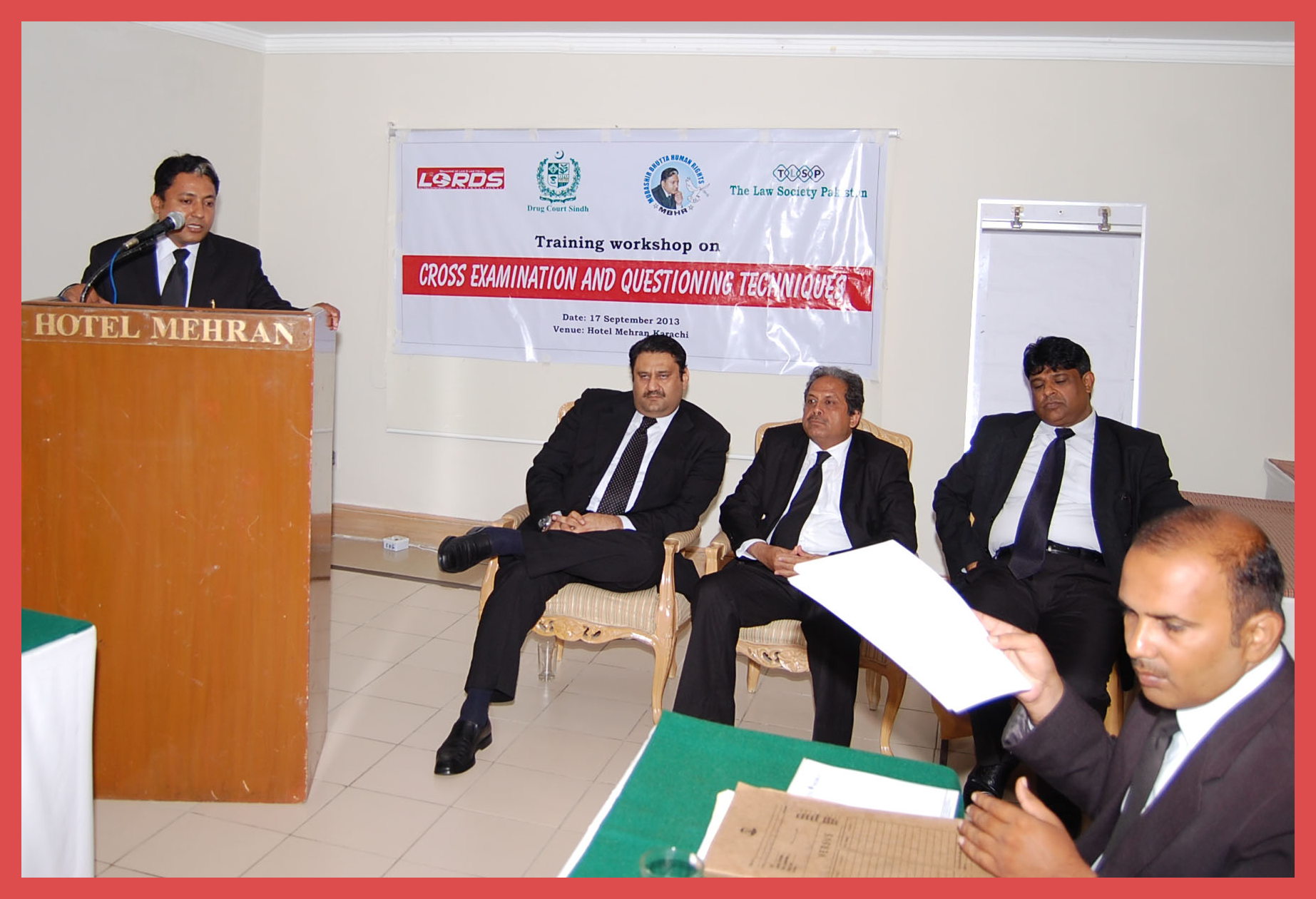
September 2013,Training workshop on cross examination and techniques, This activity was organized by the Mubashir Bhutta Human Rights
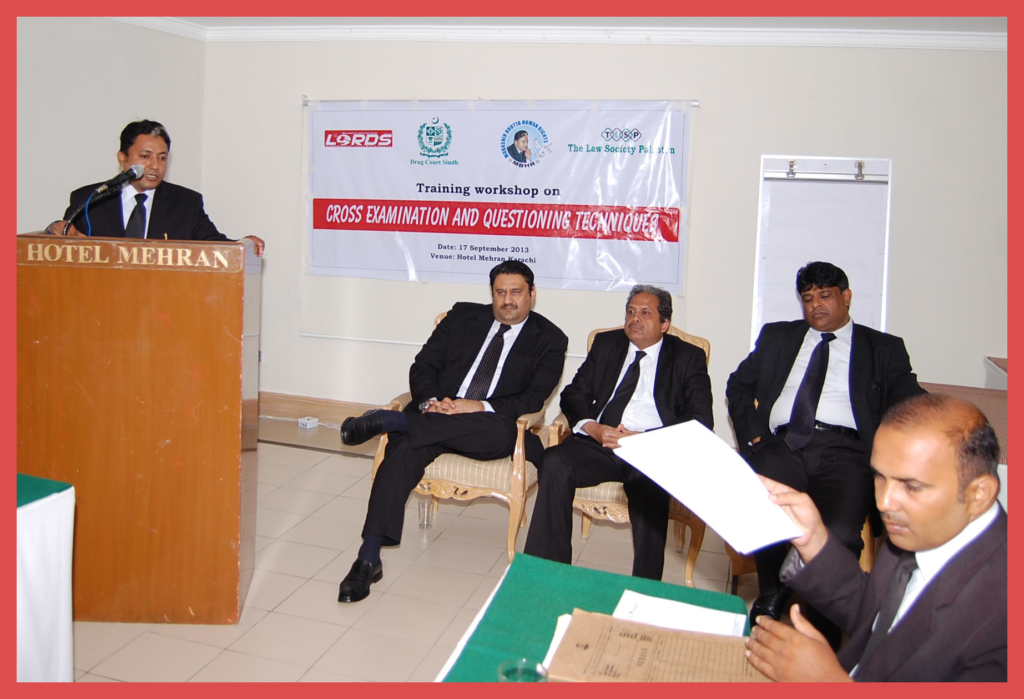
September 2013
Training workshop on cross examination and techniques, This activity was organized by the Mubashir Bhutta Human Rights and The law society of Pakistan, senior lawyers participated and deliver the lectures including the judge of customs court Mr.Nadeem and senior lawyer Mr.Salim Salam Ansari advocate, While delivering the lecture Mr.Mubashir Bhutta Advocate shared his experience and mentioned that Cross-examination is an important aspect of legal proceedings, and it involves questioning a witness who has already testified in order to challenge or clarify their testimony. Here are some common techniques and tips for effective cross-examination:
Listen Carefully: One of the most important aspects of cross-examination is to listen carefully to the witness’s answers. This will help you identify inconsistencies, contradictions, or gaps in their testimony that can be used to challenge their credibility or cast doubt on their account.
Ask Open-Ended Questions: When cross-examining a witness, it is often more effective to ask open-ended questions that allow the witness to provide a detailed answer. This can help you to elicit additional information or to get the witness to contradict their own testimony.
Use Leading Questions: Leading questions are questions that suggest the answer, and they can be a powerful tool in cross-examination. By asking leading questions, you can control the witness’s testimony and steer it in a direction that supports your case.Avoid Arguing: It is important to avoid arguing with the witness during cross-examination, as this can make you appear unprofessional or overly aggressive. Instead, focus on asking clear, concise questions that challenge the witness’s testimony.
Summarize and Repeat: When cross-examining a witness, it is helpful to summarize their testimony and then repeat your question. This can help to clarify any confusion or ambiguity and ensure that the witness is answering the question you intended to ask.
Use Impeachment Evidence: Impeachment evidence is evidence that is used to challenge the credibility of a witness, and it can be a powerful tool in cross-examination. This can include prior inconsistent statements, criminal records, or other evidence that calls into question the witness’s reliability or truthfulness.
Be Prepared: Effective cross-examination requires careful preparation, including reviewing the witness’s testimony, identifying potential weaknesses or inconsistencies, and anticipating possible responses. It is also important to have a clear strategy and to remain focused and organized during the examination.
Overall, cross-examination is a critical component of legal proceedings, and effective use of cross-examination techniques can help to challenge the credibility of a witness and strengthen your case.